White Oak Kitchen Cabinets: A Scottsdale Homeowner's Guide
White oak has become one of the most sought-after materials in contemporary kitchen design, and for good reason. Its warm, neutral tone, subtle grain character, and versatility make it an exceptional choice for Scottsdale kitchens ranging from modern desert contemporary to transitional and beyond. This guide covers everything you need to know about white oak kitchen cabinets — from wood characteristics and finish options to door styles, countertop pairings, hardware, and design ideas.
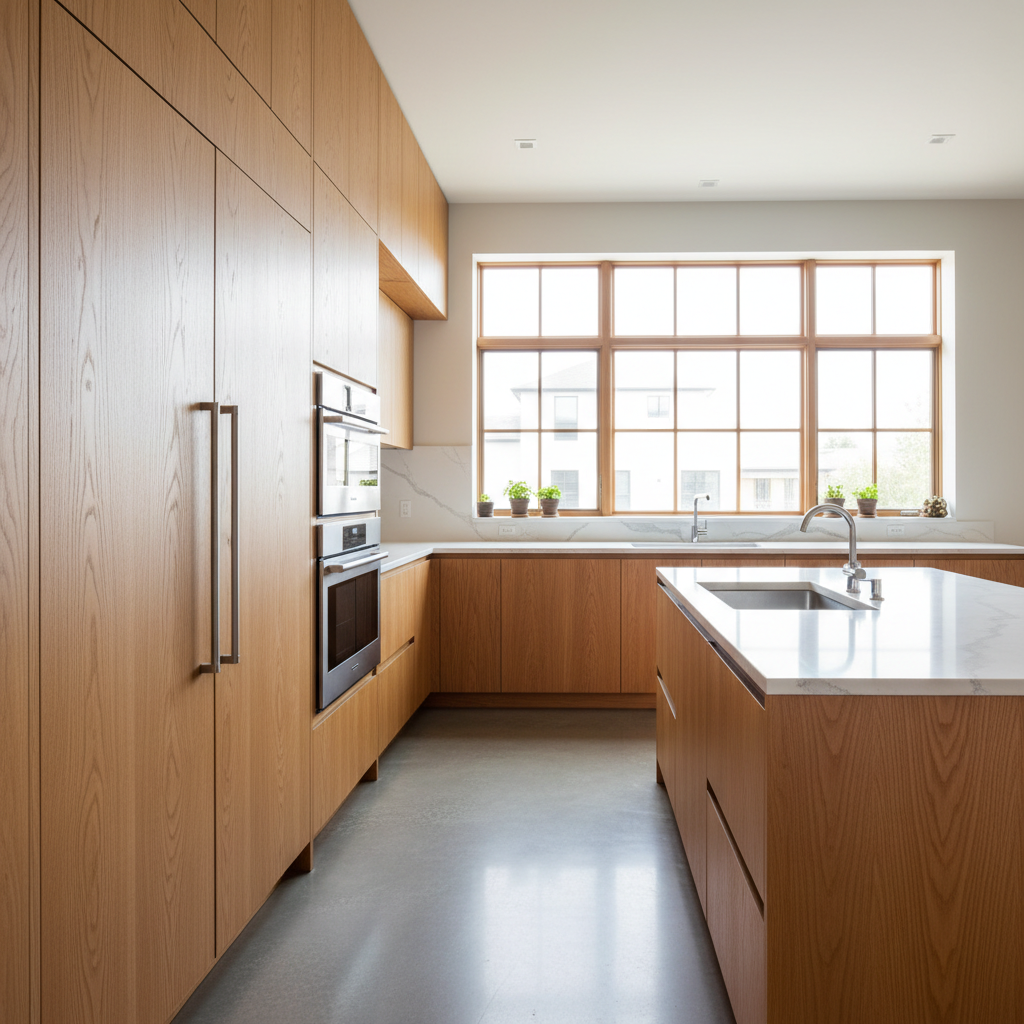
Table of Contents
- What Is White Oak?
- Why Homeowners Choose White Oak
- Rift-Sawn, Quarter-Sawn, and Flat-Sawn White Oak
- White Oak Finishes
- White Oak Shaker and Slab Cabinets
- White Oak vs. Painted Cabinets
- White Oak vs. Walnut
- White Oak Kitchen Islands
- Two-Tone Kitchens with White Oak
- Choosing Countertops for White Oak Cabinets
- Choosing Hardware for White Oak Cabinets
- Maintaining White Oak Cabinetry
- Frequently Asked Questions
What Is White Oak?
White oak (Quercus alba) is a North American hardwood species with a long history in furniture, flooring, and cabinetry. It is distinct from red oak — the species that was ubiquitous in American kitchens of the 1980s and 1990s — in both appearance and character. White oak has a more neutral, cooler tone than red oak, a tighter and more consistent grain pattern, and a natural resistance to moisture that makes it well-suited to kitchen environments.
The wood's natural color ranges from a light tan to a warm beige with occasional gray or greenish undertones, depending on the specific tree and growing conditions. This neutral, warm-but-not-orange tone is one of the primary reasons white oak has become so popular in contemporary kitchen design — it reads as a natural material without the dated associations of the honey-tone oak that preceded it.
White oak's grain is characterized by medullary rays — the distinctive fleck pattern visible when the wood is quarter-sawn or rift-sawn. These rays are more pronounced in white oak than in red oak and are a recognizable characteristic of the species. The visibility of the ray fleck depends on how the wood is cut.
Why Homeowners Choose White Oak
White oak cabinets appeal to Scottsdale homeowners for several reasons that go beyond aesthetics. The material brings warmth and natural character to a kitchen without the visual heaviness of darker wood species like walnut. It works well in both modern and transitional design contexts. It pairs naturally with the stone, concrete, and natural material palettes common in Scottsdale's contemporary residential architecture.
White oak also offers a sense of permanence and quality that painted cabinets can sometimes lack. The visible grain and natural variation of the wood communicate craftsmanship and material authenticity in a way that a painted surface cannot. For homeowners who want a kitchen that feels both contemporary and enduring, white oak is a compelling choice.
The material's versatility is another significant advantage. White oak works equally well in Shaker door profiles and slab doors, in natural finishes and stained finishes, in full perimeter cabinetry and as an accent material for a kitchen island or pantry wall. This flexibility allows designers and homeowners to use white oak in ways that are tailored to the specific kitchen and design intent.
Rift-Sawn, Quarter-Sawn, and Flat-Sawn White Oak
The way white oak is cut from the log significantly affects its appearance. Understanding the three primary cuts helps homeowners specify the look they want.
Rift-Sawn White Oak
Rift-sawn white oak is cut at approximately 30–60 degrees to the growth rings, producing a straight, consistent grain pattern with minimal ray fleck. The result is a clean, linear appearance that is highly popular in contemporary cabinet applications. Rift-sawn white oak has a calm, organized visual quality that works particularly well in modern and minimalist kitchens. It is also the most dimensionally stable of the three cuts, with less tendency to expand and contract with humidity changes.
Quarter-Sawn White Oak
Quarter-sawn white oak is cut perpendicular to the growth rings, which exposes the medullary rays and produces the distinctive ray fleck pattern that white oak is known for. The fleck creates a more decorative, textured appearance that some homeowners find beautiful and others find too busy for a contemporary kitchen. Quarter-sawn white oak is also dimensionally stable and is a traditional choice for furniture and cabinetry.
Flat-Sawn White Oak
Flat-sawn white oak is cut parallel to the growth rings, producing a more varied grain pattern with cathedral figures and a more rustic character. It is the most economical cut but also the least dimensionally stable. Flat-sawn white oak is less common in contemporary cabinet applications than rift-sawn, but it can work well in kitchens where a more organic, natural character is desired.
White Oak Finishes
The finish applied to white oak cabinets significantly affects their final appearance. The range of options is broad, from clear finishes that preserve the wood's natural color to stains that shift the tone in various directions.
Natural/clear finishes preserve the wood's natural color and grain character with a clear or very lightly tinted topcoat. This is the most popular choice for homeowners who want the authentic white oak look — the warm, neutral tone with visible grain and natural variation.
Light stains can shift the white oak tone slightly — a light gray stain creates a more Scandinavian, bleached appearance; a warm honey stain adds warmth without the orange undertones of traditional oak stains. Light stains allow the grain to remain visible while adjusting the overall color.
Wire-brushed or cerused finishes accentuate the grain texture by removing the softer wood fibers, creating a tactile surface with enhanced grain visibility. This finish adds depth and character to the wood and is popular in contemporary and transitional kitchen designs.
Oil finishes penetrate the wood rather than forming a surface film, creating a matte, natural appearance that feels close to the raw wood. Oil finishes require periodic maintenance — re-oiling every year or two — but are easy to spot-repair and develop a beautiful patina over time.
White Oak Shaker and Slab Cabinets
White Oak Shaker Cabinets
Shaker doors in white oak are among the most popular cabinet configurations in contemporary Scottsdale kitchens. The clean, recessed panel of the Shaker door allows the wood grain to be the primary visual element without competing with an elaborate door profile. The result is a kitchen that feels both crafted and restrained — natural material expressed through a simple, well-proportioned form.
White oak Shaker cabinets work particularly well in transitional kitchens where the homeowner wants natural wood warmth alongside clean, contemporary lines. They pair naturally with stone countertops, simple hardware, and a neutral backsplash.
Modern White Oak Slab Cabinets
White oak slab doors — a single flat panel with no frame detail — create a more contemporary, minimalist appearance. The uninterrupted wood surface allows the grain to be read as a continuous pattern across the cabinet face, which can be particularly striking with rift-sawn white oak's straight, consistent grain. Slab doors in white oak are popular in modern and contemporary kitchens where clean lines and minimal visual complexity are priorities.
White Oak vs. Painted Cabinets
The choice between white oak and painted cabinets is one of the most common design decisions in a Scottsdale kitchen remodel. Both are excellent choices — the right one depends on the homeowner's design preferences and the overall direction of the kitchen design.
White oak brings warmth, natural character, and material authenticity to a kitchen. It creates a sense of organic richness that painted cabinets cannot replicate. However, white oak is a natural material with natural variation — no two boards are identical, and the grain pattern will be visible and prominent.
Painted cabinets offer a clean, uniform surface that can be specified in any color. White and light-painted cabinets reflect more light and can make a kitchen feel larger and brighter. Painted cabinets are also more forgiving of surface imperfections and easier to touch up if damaged.
Many Scottsdale homeowners choose a combination: white oak for the kitchen island or a pantry wall, with painted perimeter cabinets. This two-tone approach captures the warmth and character of white oak as a focal point while maintaining the brightness and simplicity of painted cabinets for the main cabinet runs.
White Oak vs. Walnut
White oak and walnut are both premium wood species used in high-end kitchen cabinetry, but they create very different kitchen aesthetics. White oak is light, warm, and neutral — it brightens a kitchen and creates a sense of openness. Walnut is dark, rich, and dramatic — it creates a kitchen with strong visual presence and a sense of luxury.
White oak works well in kitchens with limited natural light where a lighter wood tone helps maintain brightness. Walnut is better suited to kitchens with abundant natural light where the dark wood does not make the space feel heavy.
Both species are available in custom cabinetry and can be specified in Shaker or slab door profiles. The choice between them is ultimately a matter of design preference and how the kitchen relates to the rest of the home's interior design.
White Oak Kitchen Islands
One of the most popular applications for white oak in Scottsdale kitchens is the kitchen island. Using white oak for the island while keeping the perimeter cabinets in a painted finish creates a natural focal point and adds warmth and character to the kitchen without committing to white oak throughout.
A white oak island with a waterfall countertop — where the stone continues down the sides of the island — creates a particularly striking design statement. The contrast between the warm wood and the cool stone is a combination that appears frequently in high-end Scottsdale kitchen design.
White oak islands can be designed with a range of storage configurations — drawers, doors, open shelving, wine storage, or integrated appliances — and can include seating overhangs for casual dining. The island's design should be coordinated with the perimeter cabinets to ensure a cohesive overall kitchen design.
Learn more about our Kitchen Islands service.
Two-Tone Kitchens with White Oak
White oak is an excellent material for two-tone kitchen designs. Common approaches include white oak lower cabinets with white painted upper cabinets, white painted perimeter cabinets with a white oak island, or white oak upper cabinets with a painted lower cabinet in a contrasting color.
The key to a successful two-tone kitchen with white oak is ensuring that the painted finish complements rather than competes with the wood tone. Warm whites, off-whites, and soft neutrals tend to work better with white oak than cool grays or stark whites, which can create an uncomfortable contrast with the wood's warm undertones.
Choosing Countertops for White Oak Cabinets
White oak cabinets pair well with a wide range of countertop materials. The neutral, warm tone of the wood is forgiving and works with both light and dark countertop choices.
White and light gray quartz creates a clean, contemporary pairing that allows the white oak to be the primary warm element. The contrast between the light countertop and the wood cabinets is crisp and modern.
Honed or leathered quartzite adds texture and a natural stone quality that complements the organic character of white oak. The matte surface of honed stone works particularly well with the natural finish of white oak.
Marble and marble-look quartz creates a luxurious pairing. The veining of marble adds visual interest that complements the grain of the white oak without competing with it.
Dark countertops — black granite, dark soapstone, or dark quartz — create a dramatic contrast with white oak that can be very effective in contemporary kitchens. The dark countertop grounds the warm wood and creates a strong visual statement.
Choosing Hardware for White Oak Cabinets
Hardware selection for white oak cabinets should complement the wood's warm, natural character. Several hardware finishes work particularly well with white oak.
Brushed brass and unlacquered brass complement the warm undertones of white oak beautifully. The combination of warm wood and warm metal creates a cohesive, sophisticated palette that is popular in contemporary Scottsdale kitchens.
Matte black creates a strong contrast with white oak that works well in modern and contemporary kitchens. The dark hardware provides definition against the light wood and creates a graphic quality that can be very effective.
Brushed nickel and satin nickel are neutral choices that work with white oak without creating a strong contrast. They are a safe choice for homeowners who want the hardware to recede rather than be a prominent design element.
Hardware style — bar pulls, cup pulls, knobs, or integrated handles — should be consistent throughout the kitchen and coordinate with other metal finishes like faucets, light fixtures, and appliance hardware.
Maintaining White Oak Cabinetry
White oak kitchen cabinets are durable and relatively easy to maintain with appropriate care. The specific maintenance requirements depend on the finish applied.
For cabinets with a lacquer, polyurethane, or conversion varnish topcoat, regular cleaning with a soft, damp cloth and a mild, pH-neutral cleaner is sufficient for routine maintenance. Avoid abrasive cleaners, harsh chemicals, and excessive moisture. Wipe up spills promptly to prevent water from penetrating the finish.
For cabinets with an oil finish, periodic re-oiling — typically once a year or as needed — maintains the finish and protects the wood. Oil-finished cabinets are easy to spot-repair: damaged areas can be sanded lightly and re-oiled without requiring a full refinish.
Regardless of finish type, avoid placing hot items directly on cabinet surfaces, and be mindful of steam from cooking that can affect cabinet finishes over time. Adequate kitchen ventilation helps protect all cabinet finishes, including white oak.
Explore our Custom Kitchen Cabinets, Kitchen Cabinets, Cabinet Design, and Kitchen Islands services.
Interested in White Oak Cabinets for Your Kitchen?
Talk with Scottsdale Kitchen Cabinets about white oak cabinetry, custom cabinet design, and kitchen remodeling for your Scottsdale home. We can show you material samples and help you develop a design that works for your space.
Frequently Asked Questions
Is white oak a durable material for kitchen cabinets?
Yes. White oak is a hardwood with good density and hardness, making it well-suited to the demands of kitchen cabinetry. It holds up well to daily use, holds screws reliably, and responds well to finishing. Like all wood species, it requires appropriate finishing and reasonable care to maintain its appearance over time.
Does white oak darken over time?
White oak can develop a slightly warmer, amber tone over time with exposure to light, which is a natural characteristic of the wood. The rate and degree of color change depends on the finish applied and the amount of light exposure. Many homeowners find that the natural aging of white oak adds to its character rather than detracting from it.
What is the difference between rift-sawn and flat-sawn white oak?
Rift-sawn white oak is cut at an angle to the growth rings, producing a straight, consistent grain pattern with minimal ray fleck. It is the most popular cut for contemporary cabinet applications because of its clean, linear appearance. Flat-sawn white oak shows a more varied grain pattern with cathedral figures. Quarter-sawn white oak shows the distinctive ray fleck pattern that white oak is known for. The cut affects both the appearance and the cost of the material.
Can white oak cabinets be painted?
White oak can be painted, but its open grain means that achieving a perfectly smooth painted finish requires more preparation than painting a closed-grain wood like maple or MDF. For homeowners who want a smooth, lacquer-like painted finish, maple or MDF doors are typically a better choice. White oak is most commonly used in natural or stained finishes that allow the wood's grain character to show.
What countertop material works best with white oak cabinets?
White oak cabinets pair well with a range of countertop materials. White or light gray quartz creates a clean, contemporary look. Honed or leathered quartzite adds texture and warmth. Waterfall marble or marble-look quartz creates a luxurious contrast. Dark soapstone or black granite creates a dramatic two-tone effect. The best pairing depends on the overall design direction and the specific tone of the white oak finish.
How do I maintain white oak kitchen cabinets?
White oak cabinets with a clear or stained finish should be cleaned with a soft, damp cloth and a mild, pH-neutral cleaner. Avoid abrasive cleaners, harsh chemicals, and excessive moisture. Wipe up spills promptly. The specific maintenance requirements depend on the finish applied — oil finishes require periodic re-oiling, while lacquer and polyurethane finishes are more durable and require less maintenance.
Are white oak cabinets more expensive than painted cabinets?
White oak cabinets are generally more expensive than painted MDF or maple cabinets because of the cost of the white oak material itself, particularly for rift-sawn cuts. The finishing process for natural wood cabinets is also different from painted cabinets. The premium for white oak varies depending on the cabinet manufacturer, the cut of the wood, and the finish specified.