How Much Do Kitchen Cabinets Cost in Scottsdale, AZ?
Kitchen cabinet pricing varies considerably depending on cabinet type, kitchen size, materials, door styles, storage configuration, and installation complexity. This guide explains the key factors that affect cabinet cost so Scottsdale homeowners can plan realistic budgets and make informed decisions.
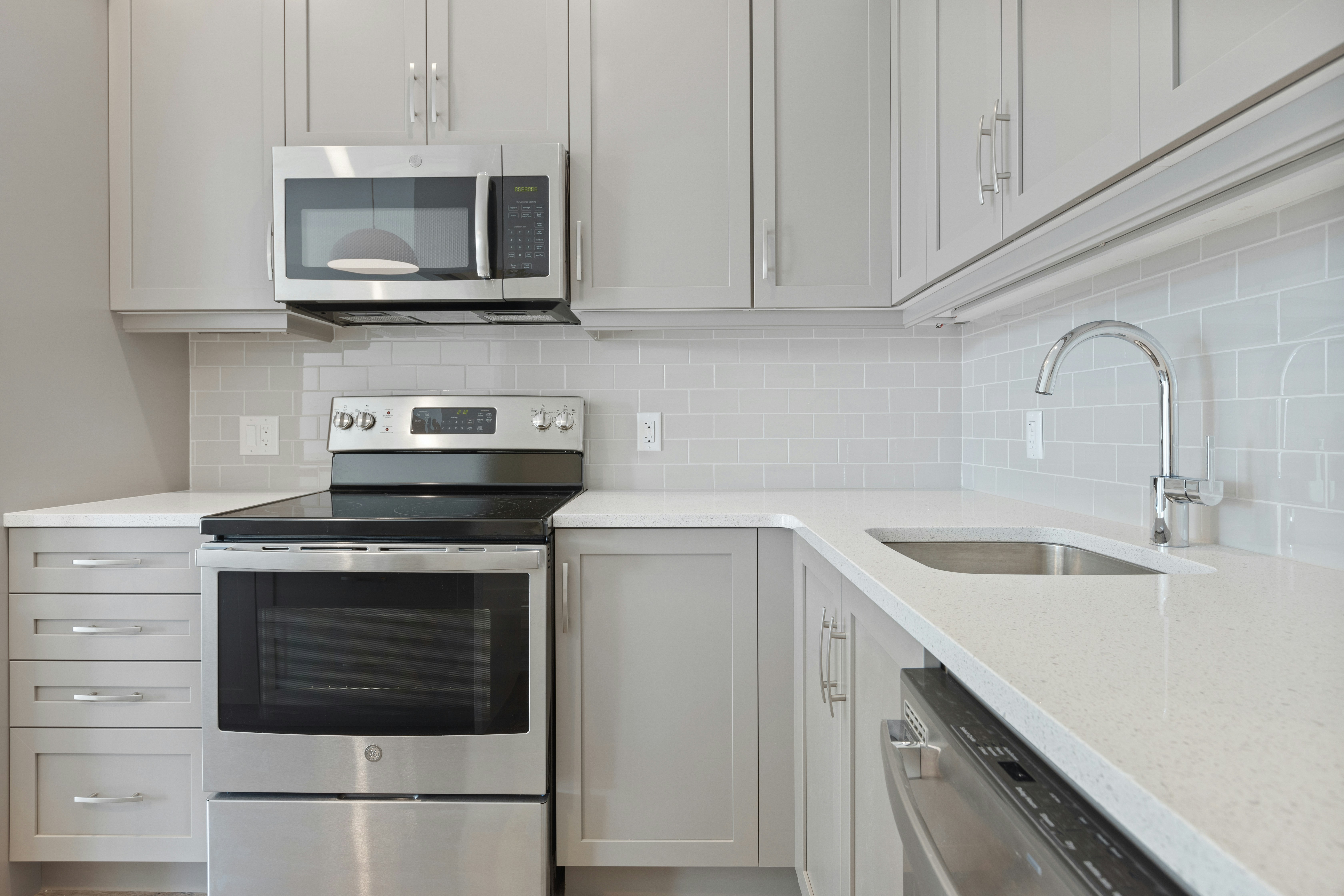
Table of Contents
- What Determines the Cost of Kitchen Cabinets?
- Stock vs. Semi-Custom vs. Custom Cabinet Costs
- How Kitchen Size Affects Cabinet Cost
- How Cabinet Materials Affect Cost
- How Kitchen Islands Affect the Budget
- Cabinet Installation Cost Factors
- Cabinet Replacement vs. Refacing vs. Painting
- How to Plan a Cabinet Budget
- Frequently Asked Questions
What Determines the Cost of Kitchen Cabinets?
No two kitchen cabinet projects cost the same amount, and the range between a modest cabinet update and a fully custom kitchen remodel can be substantial. Understanding the variables that drive cost helps homeowners set realistic expectations before requesting quotes.
The primary cost drivers for kitchen cabinets are: the type of cabinet (stock, semi-custom, or custom), the total number of cabinets and linear footage required, the cabinet box construction material, the door style and finish, the hardware selected, the storage features included, and the complexity of the installation.
Each of these factors compounds the others. A large kitchen with custom cabinetry, specialty storage, a kitchen island, and complex installation will cost considerably more than a smaller kitchen with semi-custom cabinets in a standard layout. Neither is inherently the right choice — the appropriate investment depends on the homeowner's goals, the kitchen's existing condition, and how long they plan to remain in the home.
Stock vs. Semi-Custom vs. Custom Cabinet Costs
Cabinet type is the single most significant cost variable in most kitchen projects. The three main categories — stock, semi-custom, and custom — represent meaningfully different approaches to cabinet design, manufacturing, and installation.
Stock Cabinets
Stock cabinets are manufactured in fixed standard dimensions — typically in 3-inch width increments — and are available immediately from home improvement retailers and cabinet dealers. Because they are produced in volume, stock cabinets are generally the most affordable option. The trade-off is limited design flexibility: you work with the available sizes, door styles, and finishes rather than specifying exactly what you need.
Stock cabinets can work well in kitchens with standard layouts where the fixed dimensions align reasonably with the available space. Filler strips are used to close gaps where cabinet dimensions do not perfectly match the wall space. The quality of stock cabinets varies significantly by manufacturer — some stock lines use plywood box construction and solid wood door frames, while others use particleboard boxes and MDF doors.
Semi-Custom Cabinets
Semi-custom cabinets are manufactured to order within a defined range of modifications. You can typically specify exact widths and heights within the manufacturer's available increments, choose from a broader selection of door styles and finishes, and add specialty storage features like pull-out shelves, drawer organizers, and custom pantry configurations.
Semi-custom cabinets represent a middle ground between the affordability of stock and the complete flexibility of custom. They are a popular choice for Scottsdale kitchen remodels where the homeowner wants a more tailored result than stock cabinets can provide but does not require the fully bespoke approach of custom cabinetry.
Custom Cabinets
Custom cabinets are built to the exact dimensions of your kitchen, with complete control over materials, construction methods, door styles, finishes, interior configurations, and specialty features. There are no standard size constraints — every cabinet is made to fit the specific space and design intent.
Custom cabinetry is particularly well-suited to kitchens with unusual dimensions, architectural features like soffits or sloped ceilings, or homeowners who want specific materials like white oak, walnut, or painted finishes in precise custom colors. Custom cabinets also allow for specialty storage solutions — integrated spice drawers, appliance garages, custom pantry systems, and kitchen islands designed to exact specifications — that stock and semi-custom lines cannot always accommodate.
Learn more about the differences between these cabinet types in our guide: Custom vs. Semi-Custom vs. Stock Kitchen Cabinets.
How Kitchen Size Affects Cabinet Cost
Cabinet cost scales with the total amount of cabinetry required. A kitchen with 20 linear feet of base and upper cabinets will require fewer cabinets, fewer doors, fewer drawer boxes, and less installation time than a kitchen with 35 linear feet of cabinetry.
Kitchen configuration also matters. An L-shaped kitchen, U-shaped kitchen, or galley kitchen each presents different corner cabinet requirements, filler needs, and installation complexity. Corner cabinets — whether lazy Susan configurations, blind corner cabinets, or specialty corner drawer systems — add cost compared to standard straight runs.
Tall cabinets, pantry cabinets, and full-height cabinet runs add both material cost and installation complexity. A kitchen that incorporates a full-height pantry wall with pull-out shelving and integrated storage will cost more than a kitchen with only base and upper cabinets.
How Cabinet Materials Affect Cost
Cabinet Box Construction
The cabinet box — the structural carcass that holds everything together — is typically constructed from plywood, MDF (medium-density fiberboard), or particleboard. Plywood is generally considered the premium choice for cabinet boxes due to its structural strength, screw-holding ability, and resistance to moisture. MDF offers a smooth, paintable surface and is commonly used for painted cabinet doors. Particleboard is the most economical option but is heavier and less resistant to moisture than plywood.
Door Styles and Materials
Door style significantly affects both the visual character of the kitchen and the cost. Shaker cabinet doors — with their recessed center panel and clean frame — are among the most popular choices in Scottsdale kitchens and are available across all cabinet types. Slab doors (flat panel, no frame detail) are popular in modern and contemporary kitchens and can be produced in a wide range of materials including MDF, solid wood, and thermofoil.
More elaborate door profiles with raised panels, decorative molding, or glass inserts add cost compared to simpler door styles. The door material also matters: solid wood doors cost more than MDF doors but offer different finishing characteristics and a different feel.
Finishes: Painted, Stained, and Natural Wood
Painted cabinet finishes — particularly in white, off-white, and soft neutral tones — are popular in Scottsdale kitchens and require careful surface preparation, priming, and multiple finish coats to achieve a durable, smooth result. Stained finishes allow the natural wood grain to show through and are common with species like white oak, walnut, maple, and cherry. Natural wood finishes with clear or lightly tinted topcoats are popular in contemporary and transitional kitchens where the wood character is a design feature.
Specialty finishes — two-tone kitchens with different colors on upper and lower cabinets, custom paint colors matched to specific design specifications, or hand-applied glazes — add cost compared to standard finish options.
How Kitchen Islands Affect the Budget
A kitchen island adds cabinet boxes, doors, drawer fronts, and often specialty storage to the project scope. The island's size, configuration, and features all affect cost. A simple island with base cabinets on one side is less expensive than a large island with cabinets on multiple sides, integrated appliances, seating overhangs, specialty drawer configurations, and a contrasting finish.
Islands also add countertop area, which affects the countertop budget separately from the cabinet cost. If the island includes a prep sink or cooktop, plumbing and electrical work add to the overall project cost.
For homeowners considering a kitchen island as part of a cabinet project, it is worth evaluating whether the existing kitchen layout can accommodate an island comfortably — adequate clearance on all sides is important for both function and building code compliance.
Cabinet Installation Cost Factors
Cabinet installation involves more than simply placing cabinets against walls. Professional installation includes leveling base cabinets on potentially uneven floors, securing upper cabinets to wall studs, fitting cabinets around windows and doorways, installing fillers and panels, hanging doors, installing drawer slides, adjusting hinges, and installing hardware.
Factors that increase installation complexity — and therefore cost — include: removing existing cabinetry, making layout changes that require moving plumbing or electrical, working in kitchens with out-of-plumb walls or uneven floors, installing tall or heavy cabinets, and fitting cabinets around architectural features.
Learn more about the installation process in our guide: How Long Does Kitchen Cabinet Installation Take?
For a detailed overview of professional installation services, visit our Cabinet Installation page.
Cabinet Replacement vs. Refacing vs. Painting
Not every kitchen cabinet project requires full replacement. Cabinet painting and cabinet refacing are options that can significantly update the appearance of a kitchen at a lower cost than full replacement — provided the existing cabinet boxes are structurally sound and the homeowner's goals can be achieved without changing the cabinet layout.
Cabinet painting retains the existing cabinet boxes and doors, refinishing surfaces with professional coatings. It is the most affordable update option but does not change door styles, cabinet dimensions, or storage configuration.
Cabinet refacing retains the existing cabinet boxes but replaces doors, drawer fronts, and exterior surfaces. It allows a door style change and a more substantial visual transformation than painting alone.
Cabinet replacement removes all existing cabinetry and installs new cabinets. It is the most comprehensive option and the only one that allows layout changes, storage redesign, and kitchen island additions. Replacing cabinetry creates opportunities to change drawer configurations, appliance placement, pantry storage, and island dimensions that painting or refacing existing cabinet boxes cannot provide.
For a detailed comparison, see our guide: Cabinet Painting vs. Refacing vs. Replacement.
Explore our services: Cabinet Painting · Cabinet Refacing · Cabinet Replacement
How to Plan a Cabinet Budget
Planning a realistic cabinet budget starts with understanding your goals. Are you updating the appearance of an existing kitchen, or are you redesigning the layout and storage? Do you need custom dimensions, or will semi-custom cabinets work for your space? Are you planning to add a kitchen island, a pantry wall, or specialty storage?
Once you have clarity on your goals, getting detailed quotes from qualified cabinet professionals is the most reliable way to understand the cost for your specific project. A thorough quote should specify the cabinet brand or manufacturer, construction type (plywood or particleboard box), door style, finish, hardware, and the full scope of installation work.
It is also worth budgeting for related costs that are part of most kitchen cabinet projects: countertop replacement or modification, backsplash work, appliance adjustments, and any electrical or plumbing changes required by a layout change.
A free consultation with a cabinet professional is a practical first step. It allows you to discuss your goals, see material and finish samples, and get a realistic sense of what your project will involve before committing to a budget.
Get a Free Cabinet Consultation
Discuss your kitchen cabinet project with Scottsdale Kitchen Cabinets. We can help you understand your options, review materials and finishes, and develop a plan that fits your goals and budget.
Frequently Asked Questions
What is the biggest factor affecting kitchen cabinet cost?
Cabinet type — stock, semi-custom, or custom — is typically the single largest cost variable. Custom cabinetry made to precise dimensions with specialty materials and finishes represents a significantly higher investment than stock cabinets in standard sizes.
Does kitchen size significantly affect cabinet cost?
Yes. Cabinet cost is closely tied to linear footage — the total length of base cabinets, upper cabinets, and tall cabinets in your kitchen. Larger kitchens with more cabinet runs require more material, more doors, more drawer boxes, and more installation time.
How does adding a kitchen island affect the cabinet budget?
A kitchen island adds cabinet boxes, doors, drawer fronts, and often specialty storage to the project. Island size, configuration, and whether it includes seating overhangs, appliance cutouts, or specialty drawers all affect the cost.
Are plywood cabinet boxes worth the extra cost over particleboard?
Plywood cabinet boxes offer better structural integrity, hold screws more reliably over time, and resist moisture better than particleboard. For kitchens that will see heavy daily use or in environments with humidity variation, plywood construction is generally considered the more durable choice.
What is the difference in cost between cabinet painting, refacing, and replacement?
Cabinet painting is generally the most affordable update option since existing cabinet boxes are retained and only surfaces are refinished. Cabinet refacing retains boxes but replaces doors, drawer fronts, and exterior surfaces. Cabinet replacement involves removing all existing cabinetry and installing new cabinets — the most comprehensive and typically most expensive option, but also the one that allows the greatest design flexibility.
Do soft-close hinges and drawer slides add significant cost?
Soft-close hardware adds a modest cost per door and drawer, but the cumulative effect across a full kitchen can be meaningful. Many homeowners consider soft-close features standard in a quality kitchen remodel given the daily-use benefit.
Should I get multiple quotes for a cabinet project?
Yes. Getting multiple quotes from qualified cabinet professionals helps you understand the range of options available for your specific kitchen and budget. A detailed quote should specify cabinet brand or manufacturer, construction type, door style, finish, hardware, and installation scope.