How Long Does Kitchen Cabinet Installation Take?
One of the most common questions homeowners ask when planning a kitchen cabinet project is how long the process will take. The honest answer is that it depends — on the cabinet type, the kitchen size, the project scope, and several factors that can extend or compress the timeline. This guide walks through every phase of a cabinet installation project so you know what to expect.
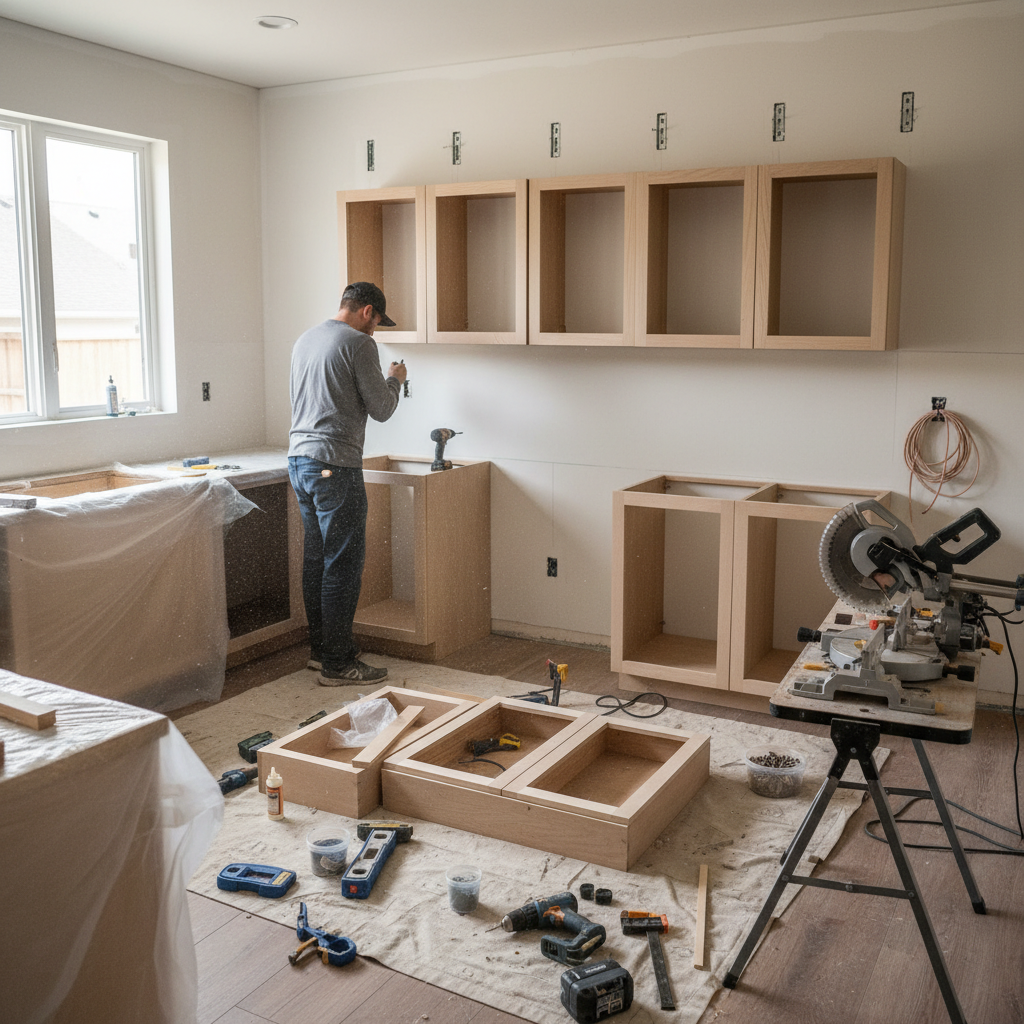
Table of Contents
The Complete Cabinet Project Timeline
A kitchen cabinet project involves many phases beyond the physical installation. Understanding the full sequence helps homeowners plan realistically and avoid surprises.
Initial Consultation
Discuss goals, review the existing kitchen, take preliminary measurements, and explore cabinet options. This phase establishes the project scope and direction.
Design and Selection
Finalize cabinet layout, door style, finish, hardware, and storage features. For custom cabinetry, detailed drawings are developed. For semi-custom, specific configurations are selected from the manufacturer's options.
Precise Measurement
Detailed measurements of the kitchen are taken to ensure accurate cabinet sizing. For custom cabinetry, this measurement phase is particularly thorough.
Ordering or Production
Semi-custom cabinets are ordered from the manufacturer. Custom cabinets enter production. This phase has the longest variable timeline — stock cabinets may be available immediately, while custom cabinets may require several weeks to months of production time.
Existing Cabinet Removal
Existing cabinets, countertops, and hardware are removed. The sink is disconnected. Walls are inspected for any issues that need to be addressed before new cabinet installation.
Site Preparation
Walls are repaired as needed. If the layout is changing, plumbing or electrical modifications are made at this stage. The floor is protected for the installation.
Cabinet Delivery
New cabinets are delivered to the site. All components are inspected for damage or missing parts before installation begins.
Base Cabinet Installation
Base cabinets are installed first, leveled carefully on the floor, and secured to wall studs. Corner cabinets, sink base, and specialty base units are positioned and secured.
Upper Cabinet Installation
Upper cabinets are installed, secured to wall studs, and aligned with the base cabinets below. Spacing and alignment are checked carefully.
Tall Cabinets and Pantry Units
Tall cabinets, pantry cabinets, and full-height units are installed and secured.
Kitchen Island
If the project includes a kitchen island, island cabinets are positioned, leveled, and secured. Island panels and trim are fitted.
Panels, Fillers, and Trim
End panels, filler strips, crown molding, light rail, and other trim elements are fitted and installed to complete the cabinet installation.
Hardware, Doors, and Drawers
Doors are hung, hinges are adjusted, drawer slides are installed, drawers are fitted, and hardware is installed. All doors and drawers are adjusted for proper alignment and smooth operation.
Countertop Coordination
After cabinets are installed, countertop templating can proceed. Stone countertops are measured precisely, fabricated, and then installed in a separate phase.
Final Inspection
All cabinets, doors, drawers, and hardware are inspected. Any adjustments are made. The kitchen is cleaned and prepared for countertop installation and appliance reconnection.
Factors That Affect the Timeline
Several factors can extend a cabinet installation project beyond the baseline timeline. Understanding these factors helps homeowners plan more accurately and make decisions that minimize delays.
Custom Cabinetry Production Time
Custom cabinets are built to specification, which means they cannot be ordered from inventory — they must be manufactured after the design is finalized and approved. The production timeline for custom cabinetry varies by cabinet maker and current production schedule. This is typically the longest single phase in a custom cabinet project.
Layout Changes and Structural Work
If the cabinet project involves changing the kitchen layout — moving the sink, relocating appliances, opening or closing walls — plumbing and electrical work must be completed before cabinet installation can begin. This work adds time to the project and requires coordination with licensed plumbers and electricians.
Wall and Floor Conditions
Walls that are significantly out of plumb, floors that are not level, or walls that reveal unexpected issues when existing cabinets are removed — such as water damage, mold, or structural concerns — can add time to the project. These issues need to be addressed before new cabinets can be properly installed.
Kitchen Islands
Large kitchen islands with complex configurations — multiple cabinet runs, integrated appliances, specialty storage, seating overhangs — add installation time compared to a simple island with a single cabinet run. Islands that include a prep sink or cooktop also require plumbing and electrical coordination.
Specialty Storage and Complex Trim
Kitchens with extensive specialty storage — pull-out pantry systems, custom corner solutions, integrated appliance panels, elaborate trim and molding — require more installation time than kitchens with simpler configurations.
Appliance Changes
If new appliances are being installed as part of the kitchen project, their delivery and installation schedule needs to be coordinated with the cabinet installation. Built-in appliances like wall ovens, warming drawers, and integrated refrigerators require specific cabinet openings and may need to be on site before certain cabinet components can be finalized.
Custom vs. Semi-Custom Timeline Differences
The most significant timeline difference between custom and semi-custom cabinet projects is the manufacturing lead time. Semi-custom cabinets are produced in a more standardized manufacturing process and typically have shorter lead times than fully custom cabinets.
However, the physical installation phase for custom cabinets may be more efficient in some respects — because custom cabinets are made to precise dimensions, there is less need for filler strips, on-site cutting, and fitting adjustments. Semi-custom cabinets, while available in more size increments than stock, may still require some on-site fitting work.
For homeowners with a specific project deadline — a home sale, a family event, or a renovation completion target — the manufacturing lead time for custom cabinetry is an important planning consideration. Discussing timeline requirements with a cabinet professional early in the planning process helps ensure the project can be completed within the desired timeframe.
Planning Your Project Timeline
The most effective way to plan a realistic cabinet project timeline is to start the planning process early and have detailed conversations with your cabinet professional about lead times, installation scheduling, and any factors specific to your kitchen that might affect the timeline.
Finalizing all design decisions — cabinet type, door style, finish, hardware, storage features, and layout — before ordering is one of the most important things homeowners can do to keep a project on schedule. Changes made after ordering can result in delays and additional costs.
Coordinating the cabinet installation with countertop fabrication, appliance delivery, and any plumbing or electrical work is also important. These trades need to be sequenced correctly — cabinets before countertop templating, countertops before sink installation, and so on.
For more information about our installation process, visit our Cabinet Installation and Cabinet Replacement pages. To explore your options, visit our Kitchen Cabinets page.
Ready to Plan Your Cabinet Project?
Talk with Scottsdale Kitchen Cabinets about your timeline, cabinet options, and project scope. A free consultation is the best first step.
Frequently Asked Questions
How long does it take to install kitchen cabinets in a typical kitchen?
The physical installation of cabinets in a typical kitchen — after the existing cabinets have been removed and the new cabinets have been delivered — generally takes several days for a professional installation crew. The total project timeline from initial consultation to completed installation is longer, as it includes design, ordering or production, and delivery phases that precede the installation itself.
Does custom cabinetry take longer than semi-custom?
Custom cabinetry typically has a longer manufacturing lead time than semi-custom cabinets because each cabinet is built to specification rather than produced in a standardized manufacturing process. The physical installation time for custom cabinets may be similar to or shorter than semi-custom, since custom cabinets are made to precise dimensions and may require less fitting and adjustment on site.
Can I use my kitchen during cabinet installation?
During active cabinet installation, the kitchen is typically not functional — countertops are removed, the sink is disconnected, and the space is occupied by installation work. Most homeowners plan for kitchen access to be limited during the installation phase and arrange alternative meal preparation accordingly.
What happens if the cabinets arrive damaged?
Reputable cabinet manufacturers and suppliers have processes for handling damaged cabinets. Damaged components are typically replaced, which can add time to the project if replacement parts need to be ordered. Thorough inspection of cabinet deliveries before installation begins helps identify any issues early.
Does removing existing cabinets add significant time to the project?
Removing existing cabinets adds time to the project, but the amount depends on the size of the kitchen, the condition of the existing cabinets, and whether the removal reveals any issues with the walls, plumbing, or electrical that need to be addressed before new cabinets can be installed.
How long does countertop installation take after cabinets are installed?
Countertop installation typically follows cabinet installation by at least a few days, as stone countertops need to be templated (measured precisely) after the cabinets are in place, then fabricated, and then installed. The time between cabinet installation and countertop installation depends on the countertop material, the fabricator's schedule, and the complexity of the countertop design.
What can I do to help the installation go smoothly?
Clearing the kitchen of all items before installation begins, ensuring the installation crew has clear access to the work area, having all design decisions finalized before ordering, and communicating promptly when questions arise during the project all help the installation proceed efficiently.