Best Kitchen Cabinet Styles for Scottsdale Homes
Cabinet style is one of the most visible design decisions in a kitchen remodel. The door profile, finish, and material you choose will define the character of the space for years. This guide covers the most popular kitchen cabinet styles for Scottsdale homes — from Shaker and slab to white oak, walnut, and two-tone designs — and explains how each interacts with countertops, flooring, hardware, and architecture.
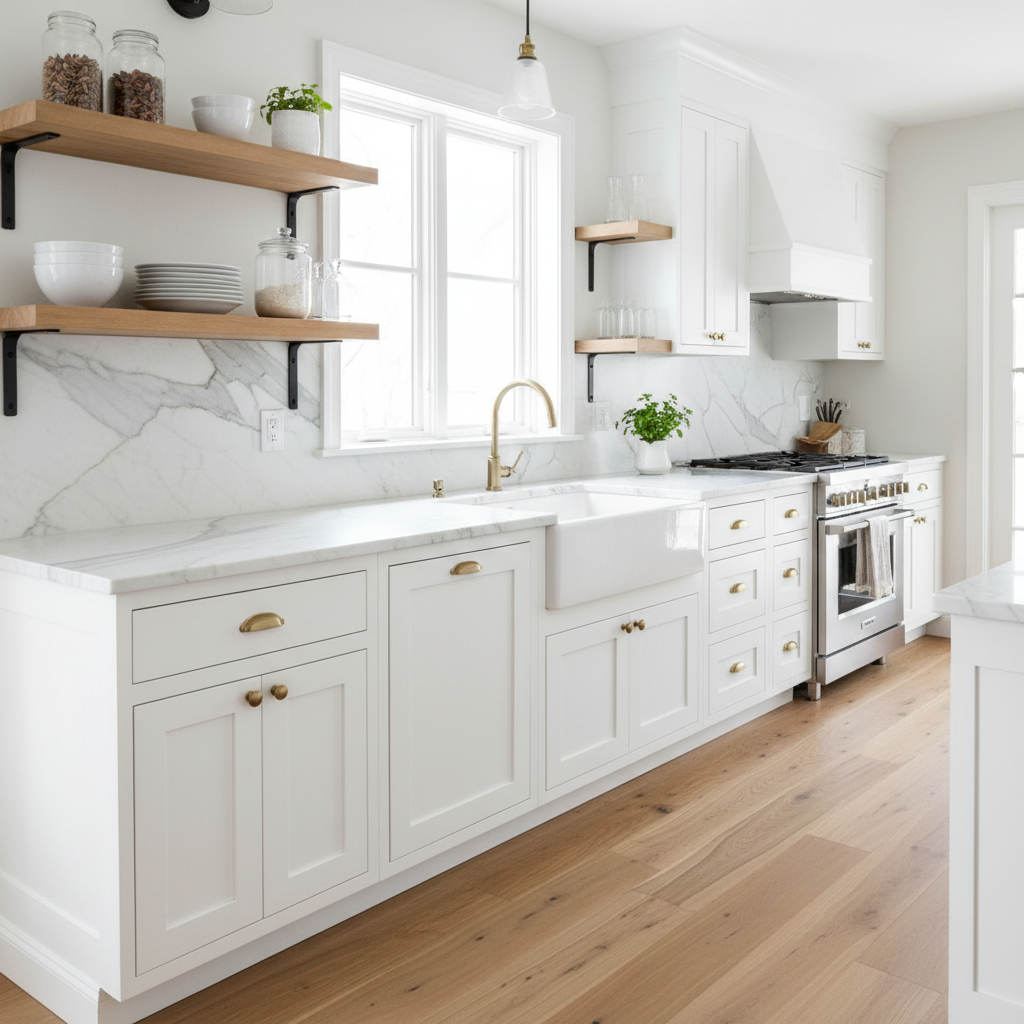
Table of Contents
- Shaker Cabinets
- Slab and Flat Panel Cabinets
- Transitional and Contemporary Cabinets
- White and Painted Cabinets
- Natural Wood Cabinets: White Oak, Walnut, and More
- Two-Tone Kitchen Cabinets
- How Cabinet Style Interacts with the Rest of the Kitchen
- Cabinet Style and Scottsdale Home Design
- Frequently Asked Questions
Shaker Cabinets
Shaker cabinet doors are defined by their five-piece construction: a flat center panel surrounded by a frame with four rails and stiles. The result is a clean, recessed panel door with simple, honest lines — no decorative molding, no ornate detail, just a well-proportioned frame around a flat panel.
Shaker cabinets are among the most versatile door styles available. They work equally well in traditional, transitional, contemporary, and farmhouse kitchens, which is one reason they have remained consistently popular across design cycles. The style's simplicity means it does not compete with other design elements — it provides a clean backdrop that allows countertops, backsplash, hardware, and lighting to take center stage.
In Scottsdale kitchens, Shaker cabinets appear in painted white and off-white finishes, in natural wood species like white oak and maple, and in stained finishes. The door style adapts to the finish rather than imposing a particular aesthetic, which makes it a reliable choice for homeowners who want design flexibility.
Shaker cabinets are available across all cabinet types — stock, semi-custom, and custom — though the quality of the door construction, the precision of the frame joints, and the finish quality vary significantly between manufacturers.
Slab and Flat Panel Cabinets
Slab cabinet doors are a single flat panel with no frame, no recessed detail, and no decorative profile. The entire door face is one continuous surface. This minimalist approach creates a clean, uninterrupted visual plane that is characteristic of modern and contemporary kitchen design.
Slab doors are popular in Scottsdale's contemporary and modern homes, where clean lines and minimal visual complexity are design priorities. They work particularly well in kitchens with integrated appliances, handleless hardware systems, and a monochromatic or limited-palette color scheme.
Slab doors can be produced in a wide range of materials: painted MDF for a smooth, lacquer-like finish; natural wood veneer for warmth and grain character; thermofoil for a seamless, easy-to-clean surface; and solid wood for premium applications. The material choice significantly affects both the appearance and the cost.
One consideration with slab doors is that any surface imperfection — a dent, a scratch, a paint chip — is more visible on a flat, uninterrupted surface than on a door with a recessed panel or frame detail. This is worth considering for kitchens with heavy daily use.
Transitional and Contemporary Cabinets
Transitional kitchen design occupies the space between traditional and contemporary — it incorporates classic elements like Shaker doors and natural materials alongside cleaner lines, simpler hardware, and a more restrained color palette. Transitional kitchens are among the most common in Scottsdale's established neighborhoods, where homes often have traditional architectural bones but homeowners want a more current interior aesthetic.
Contemporary kitchen design emphasizes clean lines, minimal ornamentation, and a sense of visual calm. Contemporary cabinets often feature slab doors, integrated hardware or simple bar pulls, and a limited color palette. The emphasis is on proportion, material quality, and craftsmanship rather than decorative detail.
Modern kitchen design is related to but distinct from contemporary — it draws on the modernist design tradition with an emphasis on function, honest use of materials, and geometric forms. Modern kitchens often feature flat-front cabinets, integrated appliances, and a strong horizontal emphasis.
White and Painted Cabinets
White kitchen cabinets have been a dominant choice in American kitchen design for decades, and they remain popular in Scottsdale for good reasons. White cabinets reflect light, make kitchens feel larger and brighter, and provide a neutral backdrop that works with virtually any countertop, backsplash, or flooring material.
The range of "white" in cabinet finishes is broader than it might seem. Pure white, warm white, off-white, cream, and soft gray-white all read differently in a kitchen, and the right choice depends on the natural light available, the undertones in the countertop and flooring, and the overall design direction.
Beyond white, painted cabinets in soft neutrals — warm gray, greige, sage green, navy, and deep charcoal — have grown in popularity as homeowners seek more distinctive kitchen designs. These colors can add depth and character to a kitchen while still providing a relatively neutral backdrop for other design elements.
The durability of painted cabinets depends significantly on the quality of the finish. Professional cabinet painting with proper surface preparation, quality primers, and durable topcoats produces a finish that holds up well to daily use. Consumer-grade paints applied without proper preparation are more likely to chip, peel, or show wear prematurely.
Natural Wood Cabinets: White Oak, Walnut, and More
Natural wood cabinets have seen a significant resurgence in popularity, driven in part by the growing appeal of white oak as a cabinet material. Unlike the honey-tone oak that was common in kitchens of the 1980s and 1990s, contemporary natural wood cabinets tend to feature lighter, more neutral wood tones with visible but not overwhelming grain character.
White Oak Cabinets
White oak has become one of the most sought-after cabinet materials in contemporary kitchen design. Its grain is more subtle and consistent than red oak, and its natural color — a warm, light tan with occasional gray undertones — works beautifully with a wide range of countertop materials, hardware finishes, and flooring choices. White oak can be finished with a clear or lightly tinted topcoat to preserve its natural character, or stained to achieve a specific tone.
For a comprehensive guide to white oak cabinetry, see our article: White Oak Kitchen Cabinets: A Scottsdale Homeowner's Guide.
Walnut Cabinets
Walnut is a premium cabinet material with a rich, dark brown color and distinctive grain patterns. Walnut cabinets create a warm, sophisticated kitchen with a strong visual presence. They work particularly well in contemporary and transitional kitchens where the wood's natural character is a central design feature.
Walnut is typically finished with a clear or lightly tinted topcoat to preserve its natural color and grain. It pairs well with light countertop materials — white quartz, light marble, or pale stone — that provide contrast to the dark wood, as well as with brass or matte gold hardware that complements the warm undertones of the wood.
Maple and Other Species
Maple is a popular cabinet material for painted finishes because of its smooth, consistent grain that takes paint well. In natural or stained finishes, maple has a clean, light appearance that works well in contemporary kitchens. Cherry, hickory, and alder are other wood species used in cabinet construction, each with distinct grain characteristics and color ranges.
Two-Tone Kitchen Cabinets
Two-tone kitchen design uses different finishes on different cabinet elements — most commonly a different color on upper and lower cabinets, or a contrasting finish on the kitchen island. This approach adds visual depth and interest to a kitchen without requiring a complete departure from a neutral palette.
Common two-tone combinations in Scottsdale kitchens include white upper cabinets with a natural wood island, white perimeter cabinets with a navy or charcoal island, and light gray upper cabinets with white lower cabinets. The contrast between the two finishes creates a focal point and adds dimension to the kitchen design.
Two-tone kitchens require careful planning to ensure the two finishes work together harmoniously. The contrast should feel intentional — a deliberate design choice rather than an afterthought. Hardware, countertop, and backsplash selections should bridge the two finishes rather than competing with them.
How Cabinet Style Interacts with the Rest of the Kitchen
Cabinet style does not exist in isolation — it interacts with every other element of the kitchen design. Understanding these interactions helps homeowners make choices that work together rather than competing.
Countertops: The countertop material and color should complement the cabinet finish. Light cabinets can support both light and dark countertops. Dark cabinets typically benefit from lighter countertops that provide contrast. Natural wood cabinets work well with stone countertops that have warm undertones.
Backsplash: The backsplash connects the countertop and upper cabinets visually. A simple, neutral backsplash allows the cabinets to be the primary design statement. A more elaborate backsplash — patterned tile, handmade tile, or a dramatic stone slab — works best with simpler cabinet designs that do not compete for visual attention.
Hardware: Cabinet hardware is a detail that has an outsized effect on the overall design. Simple bar pulls in brushed nickel, matte black, or brass can significantly change the character of the same cabinet door. Hardware should be consistent throughout the kitchen and coordinate with other metal finishes.
Flooring: Kitchen flooring should complement rather than match the cabinet finish. Similar tones in flooring and cabinetry can create a flat, undifferentiated appearance. Contrast between floor and cabinet color adds depth and definition to the space.
Natural light: The amount and direction of natural light in a kitchen significantly affects how cabinet colors and finishes appear. A north-facing kitchen with limited natural light may benefit from lighter cabinet colors that reflect available light. A south-facing kitchen with abundant natural light can support darker or richer cabinet finishes without feeling heavy.
Cabinet Style and Scottsdale Home Design
Scottsdale's residential architecture spans a wide range — from contemporary desert modern homes in North Scottsdale and DC Ranch to Mediterranean-influenced homes in McCormick Ranch and Gainey Ranch to more traditional designs in established neighborhoods. Cabinet style choices should respond to the home's architecture and the homeowner's design sensibility rather than following a single prescribed trend.
Contemporary desert modern homes often feature clean-lined slab cabinets, natural wood elements, and a palette that references the desert landscape — warm neutrals, stone tones, and natural materials. Transitional homes in established Scottsdale neighborhoods often work well with Shaker cabinets in painted or natural wood finishes that bridge traditional and contemporary aesthetics. Mediterranean-influenced homes may support more traditional cabinet profiles with raised panels or decorative details.
The best cabinet style for any Scottsdale home is the one that responds thoughtfully to the architecture, the homeowner's design preferences, and the way the kitchen relates to adjacent living spaces. A professional cabinet design consultation can help homeowners navigate these decisions with material samples, finish options, and design expertise.
Explore our Kitchen Cabinets, Custom Kitchen Cabinets, Cabinet Design, and Kitchen Islands services.
Explore Cabinet Styles for Your Scottsdale Kitchen
Talk with Scottsdale Kitchen Cabinets about cabinet design, door styles, finishes, and materials for your kitchen project. We can help you find the right style for your home.
Frequently Asked Questions
What is the most popular kitchen cabinet style in Scottsdale?
Shaker cabinets remain consistently popular in Scottsdale kitchens because of their versatility — they work well in transitional, contemporary, and traditional designs. Modern slab cabinets have grown significantly in popularity for contemporary and minimalist kitchens. The right style depends on the home's architecture, the homeowner's design preferences, and how the kitchen relates to adjacent living spaces.
Do white cabinets show more wear than wood-tone cabinets?
White and light-painted cabinets can show scuffs and marks more readily than darker or wood-tone finishes, particularly around high-traffic areas like door edges and around hardware. The quality of the paint or coating applied significantly affects durability. Professional cabinet painting with quality primers and topcoats produces a more durable finish than consumer-grade paints.
What countertop works best with white oak cabinets?
White oak cabinets pair well with a range of countertop materials. White or light gray quartz creates a clean, contemporary look. Leathered or honed quartzite adds texture and warmth. Waterfall marble or marble-look quartz creates a luxurious contrast. Dark soapstone or black granite creates a dramatic two-tone effect. The best pairing depends on the overall design direction and the specific tone of the white oak finish.
Are two-tone kitchens a passing trend?
Two-tone kitchens — typically with different finishes on upper and lower cabinets, or a contrasting kitchen island — have been popular for several years and continue to appear in high-end kitchen design. The specific color combinations evolve, but the concept of using contrasting cabinet finishes to add visual interest and depth is a durable design approach rather than a short-lived trend.
How does cabinet style affect the perceived size of a kitchen?
Cabinet style, color, and finish all affect how spacious a kitchen feels. Light-colored cabinets — white, off-white, light gray — tend to make kitchens feel larger and brighter. Full-height cabinets that extend to the ceiling draw the eye upward and can make ceilings feel higher. Open shelving in place of upper cabinets creates a more open feel but reduces storage. Slab doors with minimal visual detail create a cleaner, less busy appearance that can make smaller kitchens feel less cluttered.
What hardware works best with Shaker cabinets?
Shaker cabinets are versatile and work with a wide range of hardware. Simple bar pulls in brushed nickel, matte black, or brass are popular choices that complement the clean lines of Shaker doors. Cup pulls add a more traditional character. Knobs can work well on doors while pulls are used on drawers. The hardware finish should be consistent throughout the kitchen and ideally coordinate with other metal finishes like faucets and light fixtures.
Can I mix cabinet styles in one kitchen?
Mixing cabinet styles within a single kitchen is generally not recommended — it tends to create a visually fragmented result. However, using a different door style or finish for a kitchen island while keeping the perimeter cabinets consistent is a common and effective design approach. The key is intentionality: the contrast should feel deliberate rather than accidental.